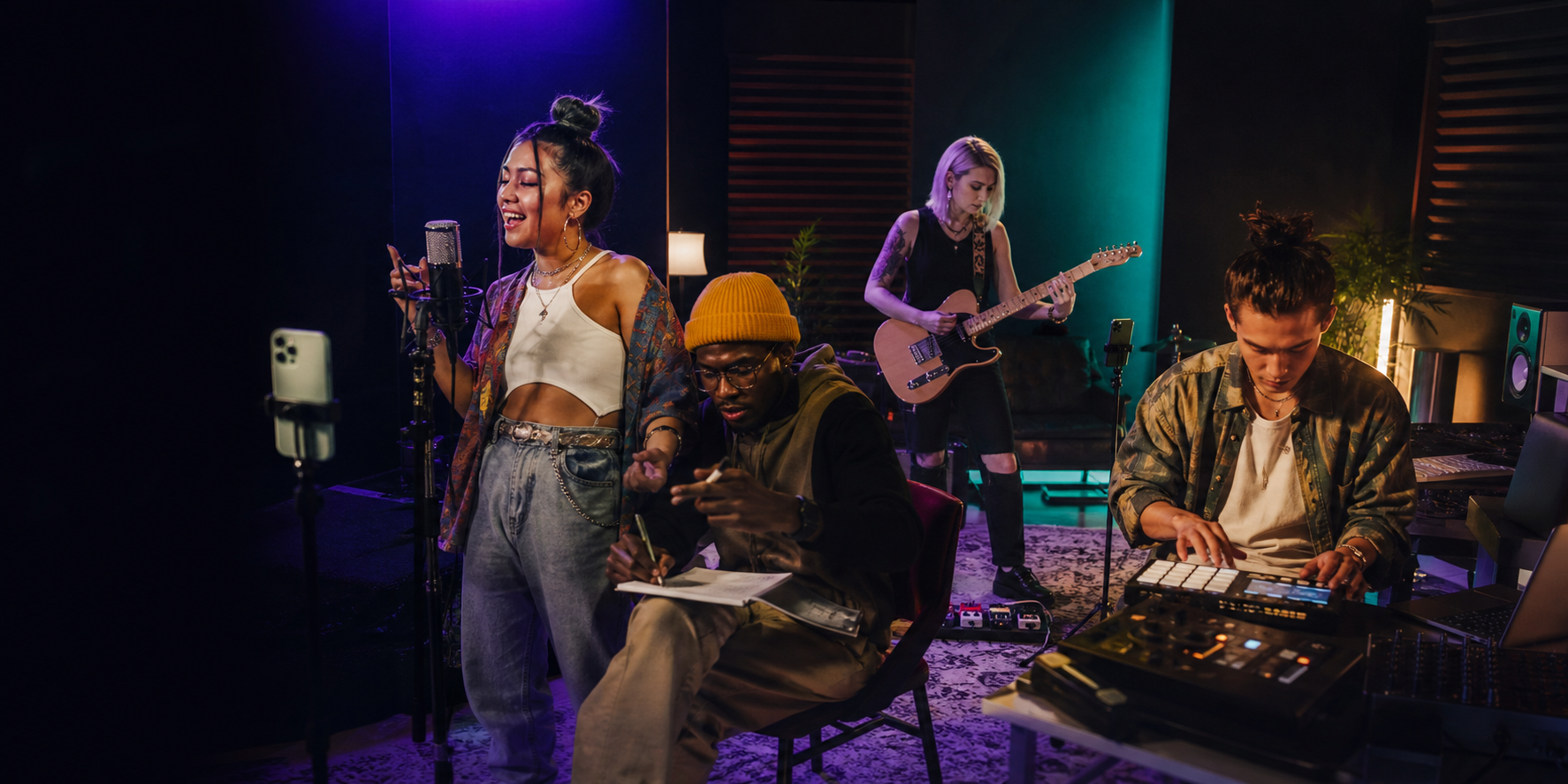
The best-performing music post and the best fan-building post are not always the same thing. A trend can create a burst of reach. A polished music-video clip can signal star power. A technically impressive performance can earn respect. But none of those automatically gives a viewer a reason to follow, return, participate, or care about what happens next.
This is true across pop, R&B, hip-hop, country, rock, alternative, electronic, Latin, Afrobeats, jazz, classical, and nearly every scene between them. The expression changes by genre; the underlying fan journey does not:
Discovery → Curiosity → Connection → Participation → Fandom
The music earns attention. Context makes the moment understandable. Personality makes the artist memorable. Recurring formats create expectation. Participation gives the audience a role. Together, those elements turn a passive listener into someone who follows the story.
Do not only market the song. Market the emotion, skill, culture, story, identity, or experience the song belongs to.
Reach is useful. Fandom is the business.
Short-form video is now one of music’s most important discovery engines. In a report commissioned by TikTok, TikTok and Luminate said 84% of songs entering the Billboard Global 200 in 2024 had gone viral on TikTok first. The same report found that TikTok-correlated artists averaged 11% week-over-week streaming growth, compared with 3% for other artists analyzed.
Discovery, however, is only the top of the funnel. Spotify’s current super-listener research makes the value of depth clearer: across artist sizes, super listeners averaged only 2% of monthly listeners but drove more than 18% of monthly streams, accounted for 50% of Spotify-attributed ticket sales, and were nine times more likely to share music.
That is the strategic opportunity. Social content should not merely collect views. It should move the right listeners toward repeat listening, sharing, saving, attending, buying, and identifying as fans.
What tends to do each job
| Content type | Discovery | Follow conversion | Fan depth |
|---|---|---|---|
| Strong performance with a clear premise | Excellent | Excellent | Excellent |
| Artist personality and storytelling | Strong | Excellent | Excellent |
| Recurring series and artist lore | Strong | Excellent | Excellent |
| Fan-usable song concepts | Excellent | Strong | Strong |
| Behind the song or craft | Strong | Strong | Excellent |
| Raw, live, rehearsal, or acoustic moments | Strong | Strong | Strong |
| Collaborations, covers, remixes, and duets | Strong | Strong | Strong |
| Lifestyle and behind the scenes | Moderate | Strong | Strong |
| Polished campaign clips | Strong | Limited alone | Moderate |
| Unrelated trending content | Potentially excellent | Limited | Weak |
This is a strategic framework, not a universal platform leaderboard. Genre, audience, career stage, performance ability, and the specific song all matter. The important distinction is that reach and fan quality must be measured separately.
1. Give the music a premise people understand immediately
A good clip is useful. A good clip with a reason to care is much more powerful. The premise tells the viewer what to feel, notice, anticipate, or do before they know the artist.
“I wrote this for anyone who keeps going back.” Ideal for pop, R&B, singer-songwriter, and country storytelling.
“Wait for the breath before the final note.” Useful for vocalists, rappers, instrumentalists, producers, jazz, and classical artists.
“This is what the demo became after one distorted guitar and a tempo change.” Strong for rock, alternative, electronic, and producers.
“POV: the hometown bar finally plays your breakup song.” Useful whenever a lyric or sound maps naturally onto real life.
The best premise is specific enough to create curiosity but honest enough to fit the music. It is not clickbait pasted onto a random clip. It is a doorway into the song’s real emotional or creative center.
2. Personality converts listeners into followers
A viewer can like a song and still have no reason to follow the artist. The follow decision is closer to: Do I want more of this person or this world?
Personality does not mean every artist must become loud, comedic, confessional, or chronically online. It means the audience can recognize a point of view. A quiet producer can be obsessive and precise. A metal band can be unexpectedly funny between takes. A country writer can be warm and story-driven. A rapper can turn fan suggestions into sharp freestyle episodes. A classical player can make virtuosity approachable without flattening the craft.
Useful formats include direct-to-camera thoughts, mini-rants, studio stories, lyric explanations, fan replies, disagreements between bandmates, gear decisions, cultural context, rehearsal failures, personal rituals, and small moments that reveal character.
If every post is cover art, “stream now,” another lip-sync, a release date, and the same clip again, the account feels like advertising rather than a relationship.
3. Build recurring formats that make following useful
A standalone viral post gives no reason to expect anything tomorrow. A recurring concept creates anticipation. The strongest series have a simple promise, a recognizable structure, and enough range to survive beyond one song.
| Genre or lane | Recurring-series idea | Why it works |
|---|---|---|
| Pop / R&B | Songs I should probably never send them | Each episode connects a lyric to a recognizable relationship situation. |
| Hip-hop | Give me three words; I will turn them into bars | Fan prompts create participation while the artist demonstrates skill. |
| Country / folk | Your hometown story becomes a chorus | Audience memories feed the genre’s narrative strength. |
| Rock / alternative | Riffs that almost made the record | Fans enter the rehearsal room and debate creative decisions. |
| Electronic | One sound, three drops | The transformation is easy to hear, compare, and comment on. |
| Latin / Afrobeats | Teach the rhythm, then show the full movement | Music, culture, movement, and participation reinforce one another. |
| Jazz / classical | The ten seconds that make this passage difficult | Skill becomes legible without requiring the viewer to know the theory first. |
Over time, recurring formats can generate fan names, catchphrases, symbols, characters, rituals, and lore. That is the point where content starts becoming culture.
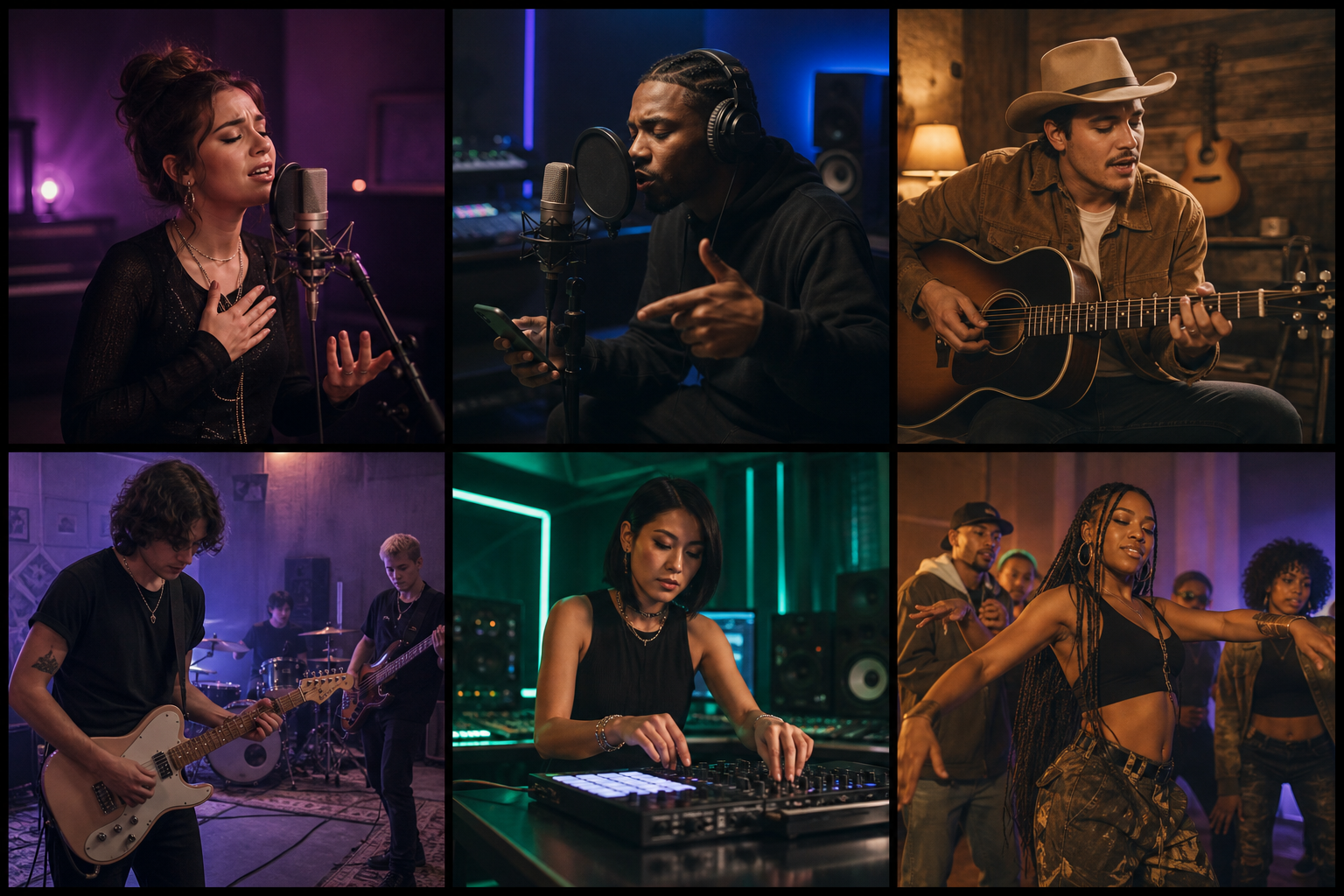
4. Give fans something they can do with the music
The strategic question is not simply, “What dance can we invent?” It is, “What behavior can this song soundtrack?” Dance is one answer. Other answers include a story, transformation, workout, joke, transition, edit, confession, cover, remix, challenge, memory, ritual, or skill demonstration.
| Emotional and social | Creative and visual | Musical and performative |
|---|---|---|
| Dating stories and relationship POVs | Before-and-after edits | Dance and movement |
| Nostalgia and hometown memories | Transformations and transitions | Duets, stitches, and covers |
| Confidence, grief, celebration, rebellion | Fashion, art, sports, travel | Open verses and remix stems |
| Memes, reactions, and character moments | Photo dumps and fan edits | Challenges and call-and-response |
Participation creates distribution. Personality converts that distribution into artist equity.
The mechanism works across genres. TikTok reported that Doechii’s hip-hop hit Anxiety inspired 10.4 million creations built around a recognizable dance and cultural reference. The platform also highlighted a resurgence for alternative-rock band The All-American Rejects after their fan-centered house-party shows generated more than 13 million UGC views in days, with views of key catalog tracks more than doubling. These are different genres and behaviors, but both gave the audience an active role.
5. Reveal the story, craft, and decisions behind the music
Fans do not only want the finished track. They want access to the meaning and process behind it. This can be emotional, technical, cultural, or all three.
- “Here is why I wrote this line.”
- “The original verse was completely different.”
- “This guitar tone came from an accident we could not recreate.”
- “The drums feel late on purpose. Here is what changes when I quantize them.”
- “This rhythm comes from where I grew up, and this is what it means.”
- “Everyone hears this as confidence. I wrote it while terrified.”
Story makes the record emotionally deeper. Craft gives musicians and curious fans something to study. Cultural context lets the artist define the work instead of allowing the algorithm to strip it of meaning.
6. Let raw moments do some of the discovery work
Bedroom. Car. Hallway. Rehearsal room. Tour bus. Kitchen. Piano. Practice pad. DJ booth. Back porch. Phone camera. A compelling artist delivering a real moment in an ordinary environment can feel like discovery rather than advertising.
The psychological difference matters: polished content can signal campaign; raw content can signal you just found something. Raw does not mean careless. The performance, opening second, framing, sound, and premise still matter. It means preserving immediacy instead of sanding away every sign of a real moment.
How the framework changes by genre
Pop and R&B: emotion, identity, and shareable situations
Lead with the strongest vocal or lyric and attach it to a recognizable emotion. Relationship POVs, transformations, choreography, styling, vocal stacks, songwriting stories, and direct-to-camera personality can all work. Ravyn Lenae’s Love Me Not, for example, spread through covers and relationship-centered interpretations; TikTok reported more than four million creations and ten billion views at the time of its 2025 profile.
Hip-hop: skill, point of view, participation, and culture
Freestyles, open verses, beat selection, bar breakdowns, fan-supplied prompts, regional context, producer collaboration, and direct commentary can make the artist’s voice legible. The goal is not to reduce the music to a meme. It is to give listeners repeatable ways to witness the writing, delivery, taste, and worldview.
Country and folk: story, place, and emotional specificity
Explain the real detail that became a lyric. Perform the chorus where the story happened. Ask fans for hometown, family, work, or relationship stories. Show voice-note demos, acoustic takes, and the writing-room decision that changed the ending. In these genres, specificity often travels farther than generic relatability.
Rock, alternative, punk, and metal: energy, access, and band chemistry
Rehearsal-room clips, riff reveals, live-room takes, gear choices, tour mishaps, crowd rituals, band arguments, breakdown reactions, and small-room performances can carry the feeling that polished clips lose. The All-American Rejects’ house-party revival is a useful example: the event itself became a participatory story, not just another catalog promotion.
Electronic, dance, and producer-led music: transformation and utility
Make the change audible: dry vocal to finished drop, sample to groove, one sound in three genres, original versus remix, build versus payoff. Give dancers, editors, DJs, gamers, and visual creators usable moments. Process content performs especially well when a non-producer can hear the difference instantly.
Latin, Afrobeats, Amapiano, and global scenes: movement, context, and community
Dance and movement matter, but so do language, local humor, rhythm, fashion, place, collaboration, and cultural explanation. Show who created the movement, where the sound comes from, and how fans can participate respectfully. A global audience should feel invited into the record without erasing its origin. TikTok’s profile of Mexican huapango-folk-rock artist Macario Martínez is a useful reminder that an honest personal context can carry regional music far beyond its starting audience.
Jazz, classical, instrumental, and experimental music: make mastery understandable
Use close-up performance, visual score moments, improvisation prompts, interpretation comparisons, unusual instruments, rehearsal problems, and “listen for this” framing. The audience does not need a theory degree; it needs a reason to notice what makes the passage extraordinary.
Give each platform a specific job
TikTok: discovery, testing, participation, and conversation
Test premises, hooks, fragments, series, replies, performance environments, and fan behaviors. TikTok for Artists provides daily analytics about posts, songs, followers, and how people are using an artist’s music. Use it as a laboratory: identify which ideas move people toward the music, not only which ones generate views.
Instagram: artist world, identity, relationship, and retention
Reels can drive discovery, while the grid, carousels, and profile establish visual identity and credibility. Stories carry closeness: rehearsals, polls, outfits, travel, random thoughts, fan reposts, voice notes, questions, ordinary life, and in-progress decisions.
YouTube: depth, search, catalog, and multi-format conversion
Shorts can introduce a moment, while long-form video, live performance, breakdowns, interviews, and official releases let viewers go deeper. YouTube for Artists separates videos, songs, Shorts, live streams, posts, and podcasts, allowing teams to compare which formats capture new listeners and which re-engage existing fans.
Streaming profiles: convert social attention into intentional listening
Social reach matters most when it drives saves, playlist adds, profile visits, repeat streams, release engagement, and catalog exploration. Spotify reports that after listeners add an artist to a personal playlist, they stream 41% more on average and visit the artist profile 12% more often. The campaign should make that next action obvious.
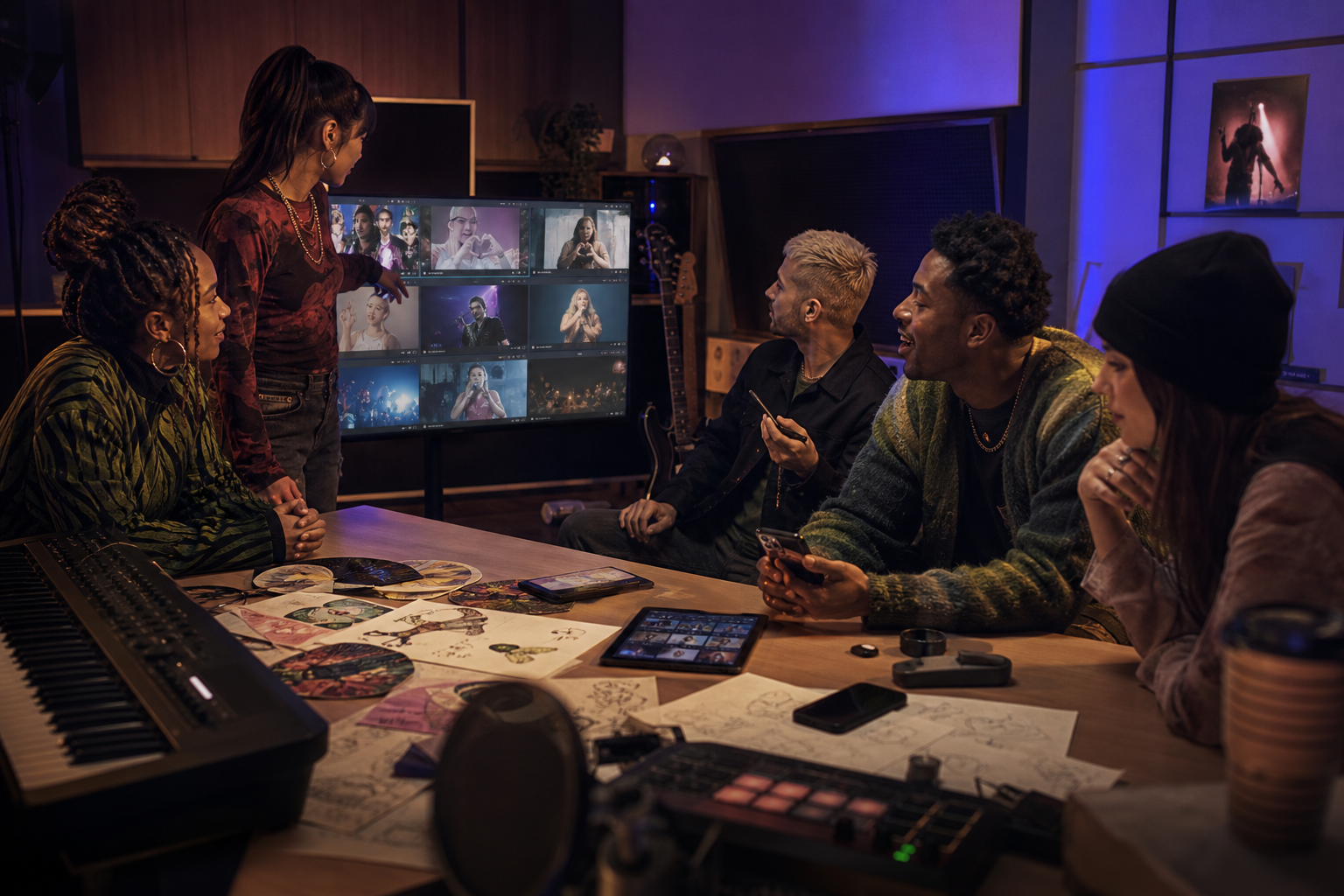
Avoid the audience-quality trap
An artist can build a large account around fashion, comedy, production tutorials, beauty, gear, lifestyle, or unrelated trends while the audience remains indifferent to the music. The content may be good. The audience may be real. The problem is misalignment.
When the release arrives, does the audience move with the music? If not, the account has attention but weak artist equity.
Track music-specific signals: saves, sound uses, comments about lyrics or production, repeat viewers, returning listeners, profile visits, catalog streams, direct searches, fan edits, mailing-list growth, ticket interest, merch behavior, and participation in recurring formats.
A practical content mix for most artists
| Share | Pillar | Purpose |
|---|---|---|
| 30% | Music moments | Performance, strongest section, live take, production transformation, or instrumental skill. |
| 25% | Personality | Opinions, humor, habits, direct conversation, band chemistry, and recognizable point of view. |
| 20% | Story and craft | Meaning, writing, production, culture, career journey, and recurring lore. |
| 15% | Fan participation | Prompts, templates, replies, covers, remixes, challenges, and community rituals. |
| 10% | Polished world-building | Music videos, photoshoots, fashion, artwork, events, and cinematic campaign assets. |
Treat this as a starting point. A DJ may increase participation and producer content. A singer-songwriter may increase story. A touring rock band may increase live access. A new pop act may need more polished identity. The mix should reflect the artist’s actual advantage.
One release should create 30 to 50 pieces of content
Do not post the same hook 25 times in different clothes. Find 25 different entry points into the same record.
Raw take, acoustic version, rehearsal, alternate tempo, stripped arrangement, live version, isolated instrument.
The line almost removed, what the song means, where it began, the real detail, the demo, the changed ending.
Beat, riff, harmony, sample, sound design, vocal stack, arrangement, mix decision, gear, or technique.
POV, sendable joke, opinion, situation, reaction, nostalgia, cultural reference, or lifestyle use.
Comment reply, open verse, cover invitation, remix, dance, prompt, transformation, fan story, or duet.
Artwork, photoshoot, music-video frame, wardrobe, location, character, symbol, visual motif, or live ritual.
The song remains the common thread, but every piece performs a different job. That variety prevents repetition while teaching the audience more about the artist and the world around the release.
Change the priorities when the objective changes
If the objective is followers
- Personality and music together
- Recurring series
- Story plus a strong performance or craft moment
- A socially usable premise
- Fan interaction and replies
- Collaborations and community crossover
If the objective is song virality
Move fan-usable formats, templates, remixes, open verses, dance, transformations, memes, and creator participation higher. The goal is to make the sound useful outside the artist’s own account.
If the objective is superfans
Prioritize story, direct interaction, lore, community identity, rituals, access, live moments, catalog connections, and continuity. Give people reasons to care between releases.
Build the artist as a hybrid: performer, craftsperson, recognizable personality, and protagonist of an ongoing story.
How Creator Studio helps turn one release into a complete campaign
The framework is simple; producing all of it consistently is the hard part. Creator Studio AI connects planning and production so an artist or team can move from one release brief to a coordinated month of content without rebuilding the workflow across disconnected tools.
- Copilot and Director: develop creative directions, hooks, genre-appropriate series, shot plans, and segmented video concepts.
- Photoshoot Studio and Character tools: create consistent campaign imagery, covers, editorial moments, and visual-world assets.
- Image Generation, Edit, Swap, and Post-Process: make variations, preserve identity, refine winners, and finish release visuals.
- Video, Motion, Audio, and Lipsync: turn strong concepts and stills into short-form performances, loops, transitions, and talking content.
- Caption Studio: adapt each creative angle into platform-aware hooks, captions, and hashtags.
- Publish Studio and Social Analytics: organize the campaign, publish finished posts, and review which formats drive meaningful response.
- InstaClone and Inspiration Dump: study reference formats, then rebuild the underlying creative direction around the artist’s own identity and music.
Creator Studio supports bring-your-own API keys, so creators can pay supported providers directly and keep control of generation spending instead of paying a premium markup on every render.
See how Creator Studio can help turn one release into a coordinated campaign across images, video, captions, publishing, and analytics. Learn more about Creator Studio →
The strategic takeaway
The strongest artist content is emotionally or creatively legible, socially usable, personality-rich, and repeatable. The exact expression should fit the genre. Music is the entry point. The artist’s identity, craft, story, and community make the follow worthwhile.
Research note: The content rankings and recommended mix above are a strategic synthesis of platform research, artist examples, and fan-building patterns. They should be tested against each artist’s own audience rather than treated as universal platform guarantees.